

AI search no longer works like a simple keyword-to-results-page system. Query fanout tracking tools for SEO help you see the related searches, sub-questions, sources, and topic branches that AI platforms may explore before generating an answer.
This matters when people search through ChatGPT, Google AI Overviews, Google AI Mode, Perplexity, Gemini, and Copilot. A broad prompt such as “best email marketing platform for small businesses” may lead an AI engine to consider pricing, deliverability, integrations, free plans, industry use cases, reviews, and comparisons before it writes one final response.
A good query fanout tracking tool helps you move beyond tracking a single prompt. It can reveal related questions worth covering in a content cluster, competitor brands that appear in AI answers, cited sources, missing topics, and regional differences.
Not every platform uses the exact term “query fanout.” Some tools directly expose fanout subqueries, while others provide prompt research, citation analysis, content gaps, and AI visibility data that help approximate the larger query journey. This guide covers both types so you can choose the right platform for your SEO workflow.
Quick Pick Criteria
- Radarkit: Best for overall query fanout tracking, AI visibility monitoring, citations, location research, and practical content actions.
- Ahrefs: Best for teams that want one platform for traditional SEO research, backlinks, keyword data, and AI brand visibility.
- Profound: Best for enterprise brand tracking and answer-engine intelligence.
- Peec AI: Best for European mid-market marketing teams that need straightforward AI visibility reporting.
- OtterlyAI: Best for automated GEO recommendations, AI citation monitoring, and AI crawler analytics.
- AthenaHQ: Best for custom AI search experiments, prompt-volume estimates, and enterprise AI search operations.
- Promptwatch: Best for teams that need AI search visibility, prompt tracking, crawler-level data, and content automation.
- SE Ranking: Best for hybrid rank tracking that combines traditional SEO reporting with AI search visibility.
- Nightwatch: Best for agencies that want daily keyword rank tracking and AI citation monitoring in one workspace.
Quick Comparison Table
| Tool | Best for | Starting price | Direct fanout relevance | Main AI visibility strengths |
| Radarkit | Overall AI visibility and query fanout research | $29/month | Yes, live query fanout tracking | Citations, competitors, local AI results, AI traffic, content agents |
| Ahrefs | SEO and AI visibility in one toolkit | $29/month | Indirect | Brand Radar, AI mentions, citations, backlinks, keyword research |
| Profound | Enterprise answer-engine tracking | $99/month | Indirect | Prompt volume, AI visibility, page tracking, agent workflows |
| Peec AI | Mid-market AI visibility reports | $95/month | Indirect | Brand mentions, prompt tracking, citations, competitor reporting |
| OtterlyAI | GEO monitoring and recommendations | $29/month | Yes, Query Fan Out | Citations, prompt research, crawl data, GEO audits |
| AthenaHQ | AI search experiments and enterprise analysis | Free, paid from $295/month | Indirect | Citation intelligence, prompt volume, visibility actions |
| Promptwatch | AI visibility and crawler analysis | $95/month | Indirect | 11-model coverage, server-side crawler logs, content gaps |
| SE Ranking | Traditional SEO plus AI search | $103.20/month | Indirect | SEO rankings, AI visibility, reporting, API, automation |
| Nightwatch | Agencies and rank tracking | €79/month, annual billing | Indirect | Daily rank tracking, citation intelligence, local visibility |
Pricing and plan limits can change. The prices in this guide reflect the public plan information available in September 2026.
9 Best Query Fanout Tracking Tools for SEO in 2026: Features, Pricing, Pros and Cons
Radarkit (radarkit.ai) – Best All-Round Query Fanout & AI Visibility Tracker
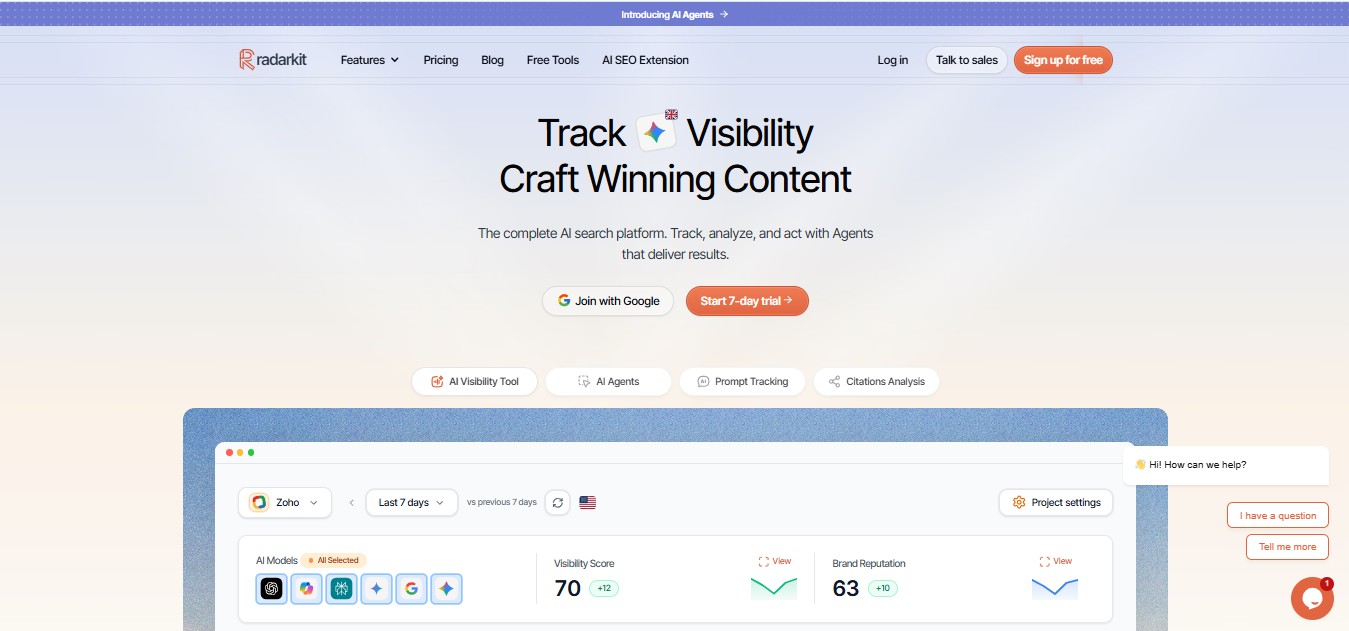
Radarkit is built for marketers who want to measure and improve AI search visibility without separating prompt tracking, citation analysis, content planning, and local research into multiple platforms.
It monitors brand visibility across ChatGPT, Google AI Mode, Google AI Overviews, Gemini, Microsoft Copilot, and Perplexity. The platform is particularly useful for query fanout tracking tools for SEO because it includes Query Fanouts that show the related questions and subtopics branching from a main prompt.
Radarkit Query Fanout Tracking Features
Radarkit captures query fanouts through live browser prompts rather than limiting analysis to one static keyword. This lets you see the secondary questions and topic paths AI systems explore behind a broader user query.
For example, if you track “best CRM for a startup,” the fanout analysis may uncover content areas such as:
- CRM pricing for small teams
- Best free CRM tools
- CRM integrations for startups
- Sales pipeline management features
- CRM options for SaaS companies
- HubSpot alternatives for startups
- CRM setup guides for first-time users
That does not mean you should publish a separate page for every fanout. Instead, use the information to build a useful topic cluster with one strong pillar page, supporting comparison pages where needed, and clear FAQ sections that answer closely related questions.
Radarkit also includes:
- AI visibility and share-of-voice tracking
- Citation analysis to identify websites and pages used in AI answers
- Competitor monitoring for brands mentioned beside yours
- Sentiment insights for brand mentions
- Local Radar for AI recommendation research across 50+ locations
- AI traffic monitoring for AI-source visits and zero-click visibility trends
- Google Search Console, Google Analytics, and WordPress connections
- Content, Outreach, Reddit, Chat, and Plan agents for turning findings into actions
- Client Portal and branded PDF reporting for agencies
Radarkit Pricing (2026)
| Plan | Monthly price | Projects | Tracked prompts | Refresh frequency |
| Lite | $29 | 2 | 15 | Every 72 hours |
| Growth | $79 | 5 | 50 | Daily |
| Pro | $139 | 10 | 100 | Daily |
| Enterprise | Custom | Unlimited | Custom | Daily or weekly |
The Lite plan is a practical starting point for freelancers, site owners, and small teams testing AI search monitoring. It includes 900 AI responses per month, location tracking, AI traffic analytics, competitors, citations, and branded reporting tools.
Growth is a better fit for regular content operations because it increases prompt monitoring to 50 prompts and updates data daily. Pro supports 100 prompts and 10 projects for larger portfolios or agencies. Radarkit also offers a seven-day free trial.
Pros of Radarkit
- Direct query fanout tracking helps uncover related AI-search questions and content opportunities.
- Covers six major AI search surfaces, including Google AI Mode and AI Overviews.
- Combines fanout data with citations, competitor tracking, sentiment, AI traffic, and location research.
- Starts at $29/month, which is accessible for individual marketers and smaller teams.
- Includes practical AI agents for content planning, outreach, and related workflows.
- Supports multiple projects and branded reporting for agencies.
- Uses live browser sessions and location-based monitoring to reflect real AI answer variations.
Cons of Radarkit
- The Lite plan has 15 tracked prompts, which may be limiting for large sites with many service lines.
- Daily refreshes start on the Growth plan.
- Teams that need large-scale API workflows, SSO, or custom enterprise controls may need the Enterprise plan.
Ahrefs
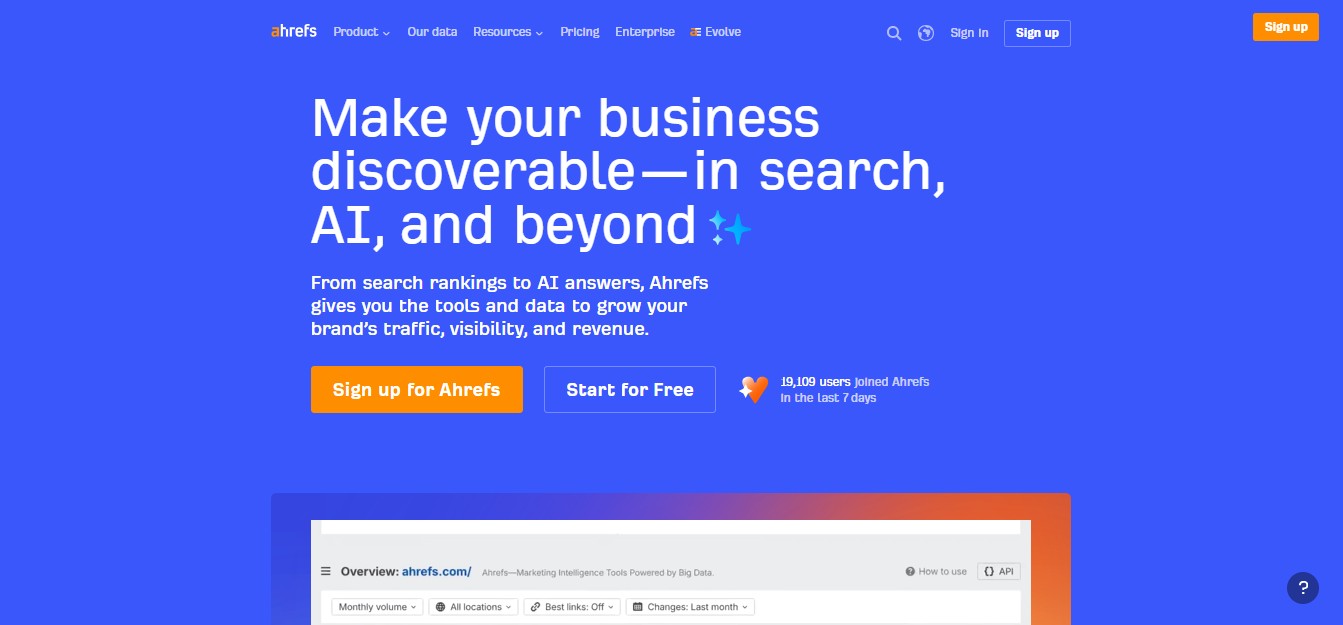
Ahrefs is well known for keyword research, backlink analysis, content research, site audits, and traditional rank tracking. Its Brand Radar feature adds AI visibility monitoring, making Ahrefs useful for teams that want to connect conventional SEO work with brand mentions and citations in AI answers.
Ahrefs is not primarily a dedicated query fan-out tracking tool. However, its prompt discovery, custom prompt tracking, citation reporting, and competitor-gap analysis can help you understand which questions matter in AI search.
Key Features
- Brand Radar for tracking AI visibility, mentions, citations, and competitor presence.
- Custom AI prompt tracking across platforms such as ChatGPT, Gemini, Perplexity, and Google AI Mode.
- Access to a large prompt database through Brand Radar.
- Keyword Explorer for conventional search demand and SERP research.
- Site Explorer for backlinks, referring domains, organic rankings, and competing pages.
- Content Explorer for finding published content and link opportunities.
- Site Audit for technical SEO checks.
- Rank Tracker for desktop and mobile keyword positions.
Pricing
Ahrefs starts at $29/month for its Starter plan. Its standard subscription tiers include Lite at $129/month, Standard at $249/month, Advanced at $449/month, and Enterprise at $1,499/month.
For teams focused on AI visibility, confirm the included Brand Radar prompt allowance carefully. The value of Ahrefs is strongest when you already need its keyword, backlink, site-audit, and competitor-research tools alongside AI monitoring.
Pros
- Combines AI visibility work with one of the most established SEO research toolkits.
- Useful for connecting AI prompt monitoring with backlink, ranking, and content data.
- Brand Radar helps identify when competitors are cited while your brand is absent.
- Custom prompt tracking supports ongoing AI visibility measurement.
- Suitable for in-house SEO teams managing large keyword and backlink programs.
Cons
- Query fanout discovery is not its central product focus.
- AI visibility features may require a higher plan or additional product access depending on your setup.
- It can be more than a smaller team needs if the main goal is fanout tracking search queries.
- The platform has a learning curve because of its wide range of SEO tools.
Profound – Best for Enterprise Brand Tracking and Real Conversation Data
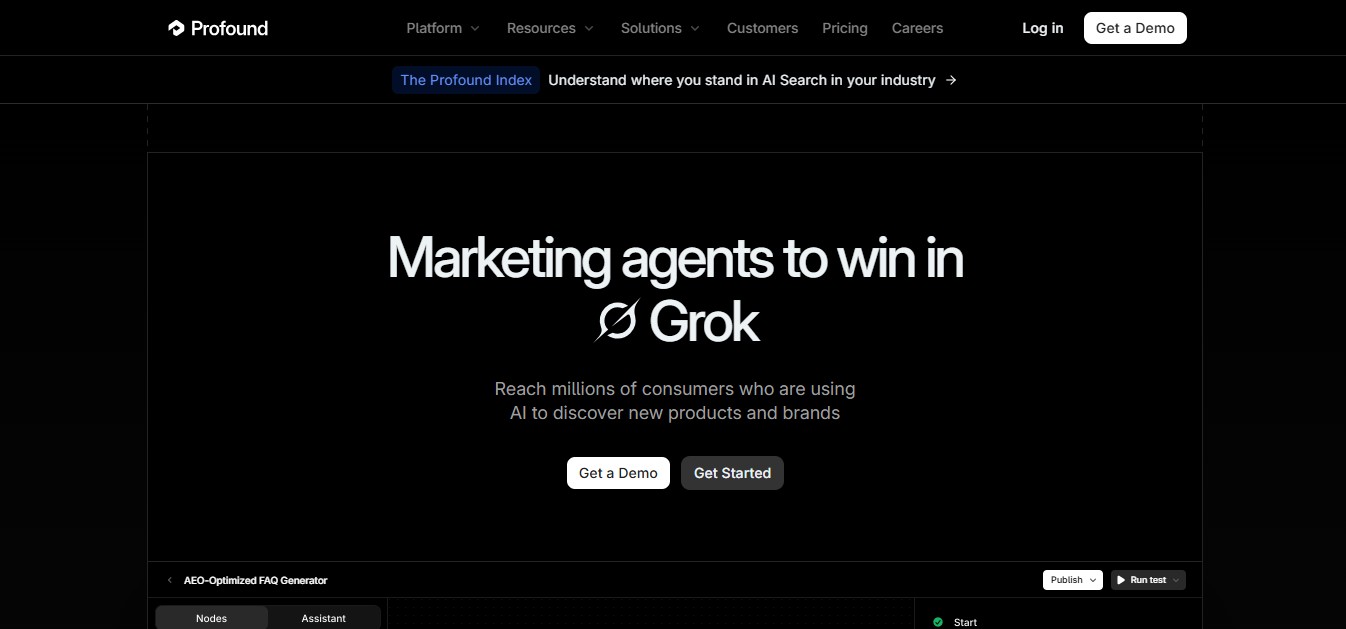
Profound is an answer-engine optimization platform for organizations that want to monitor how their brand appears across major AI systems. It covers platforms including ChatGPT, Perplexity, Claude, Gemini, Grok, Copilot, DeepSeek, and Google AI Overviews.
Its strength is enterprise-level AI search analysis, especially for companies tracking large prompt sets, multiple markets, content performance, and agent activity.
Key Features
- Brand visibility tracking across major answer engines.
- Prompt volume estimates to help prioritize AI search topics.
- Prompt tracking and answer analysis.
- Citation and brand mention monitoring.
- Website page tracking through sitemap crawling.
- AI crawler and agent analytics.
- Content insights and workflow support for AEO programs.
- Country-level prompt volume coverage, including India and other global markets.
Pricing
Profound has Starter, Growth, and Enterprise plans. Its public pricing page lists plan structures and feature limits, but published prices may not always be displayed in the same way for every visitor.
Recent public plan references list Starter at $99/month for ChatGPT-focused tracking with 50 prompts, one seat, and 100 agent credits. Growth is listed at $399/month for three answer engines, 100 prompts, three seats, and 400 agent credits. Contact Profound directly before publishing fixed pricing, especially for enterprise requirements.
Pros
- Broad AI engine coverage for organizations monitoring multiple answer platforms.
- Strong for enterprise brand measurement and large-scale AI-search programs.
- Includes page-level tracking through sitemap discovery.
- Prompt volumes can help prioritize which AI-search questions deserve attention.
- Supports crawler and agent activity analysis.
Cons
- Higher entry pricing than tools designed for solo users or smaller agencies.
- Query fanout data is not presented as a core standalone feature.
- Credit and plan limits require planning when tracking multiple engines and markets.
- Best suited to teams with regular reporting, content, and technical SEO resources.
Peec AI – Best for European Mid-Market SEO Teams
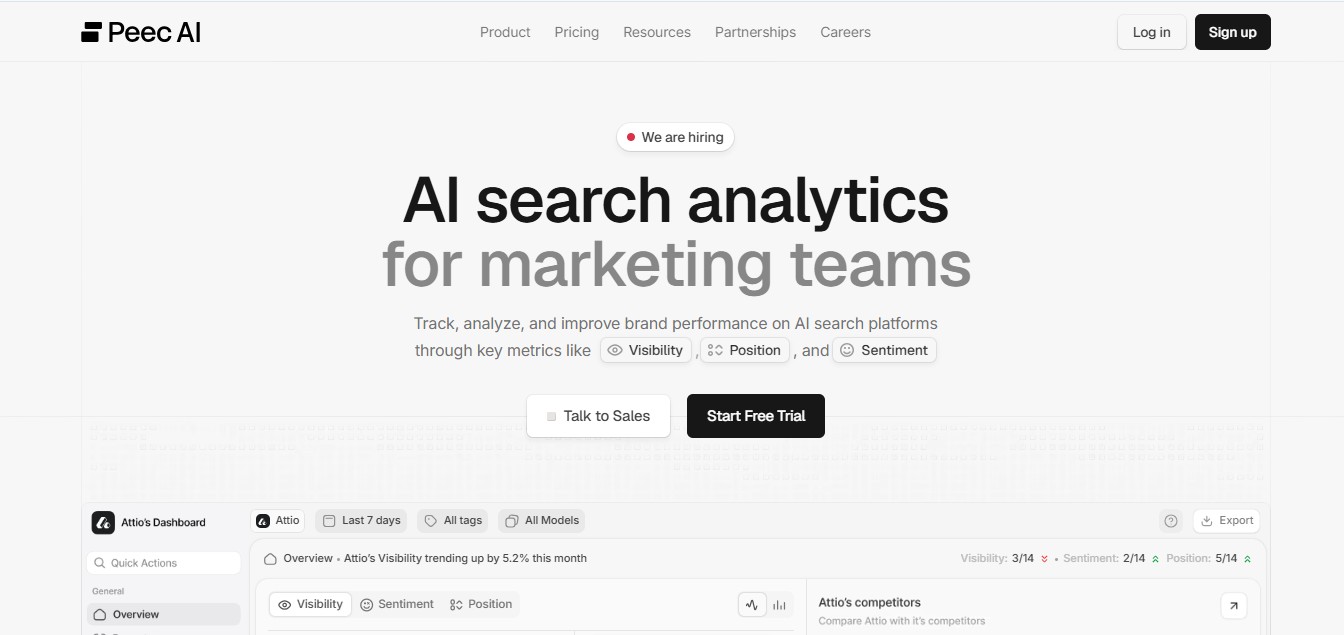
Peec AI is an AI search analytics platform for marketing teams that want a focused view of brand visibility across AI platforms. It is especially suitable for teams that need straightforward reporting on prompts, brand mentions, citations, competitors, sentiment, and source domains.
Peec AI does not lead with direct fanout tracking search queries. Instead, it helps teams monitor selected prompts over time and identify the content, competitors, and sources associated with AI answers.
Key Features
- Brand visibility tracking across ChatGPT, Perplexity, and Gemini.
- Prompt-level monitoring and reporting.
- Brand position, sentiment, and source analysis.
- Competitor benchmarking and visibility comparisons.
- Project management for multiple brands or business units.
- Multi-country tracking on higher plans.
- Looker Studio integration for reporting.
- CSV exports, API access, and MCP integration on eligible plans.
Pricing
Peec AI’s Starter plan costs $95/month on monthly billing or $80/month when billed annually. It includes 50 prompts, three selected models, one project, daily tracking, and unlimited users.
The Pro plan costs $245/month monthly or $205/month annually, with 150 prompts and two projects. Advanced costs $495/month monthly or $420/month annually, with 350 prompts, five projects, multi-country tracking, and Looker Studio reporting. Enterprise pricing is custom.
Pros
- Clean pricing structure based on tracked prompts, models, and projects.
- Useful for marketing teams that want simple AI visibility reporting.
- Unlimited users are available on its standard plans.
- Supports competitor, citation, sentiment, and source analysis.
- Advanced plans add multi-country research and reporting connections.
Cons
- Direct AI search fanout analysis is not the platform’s main differentiator.
- The Starter plan is more expensive than Radarkit and OtterlyAI Lite.
- Lower plans track a limited number of selected AI models.
- Larger content teams may outgrow the prompt allowance on lower tiers.
OtterlyAI – Best for Automated GEO Recommendations
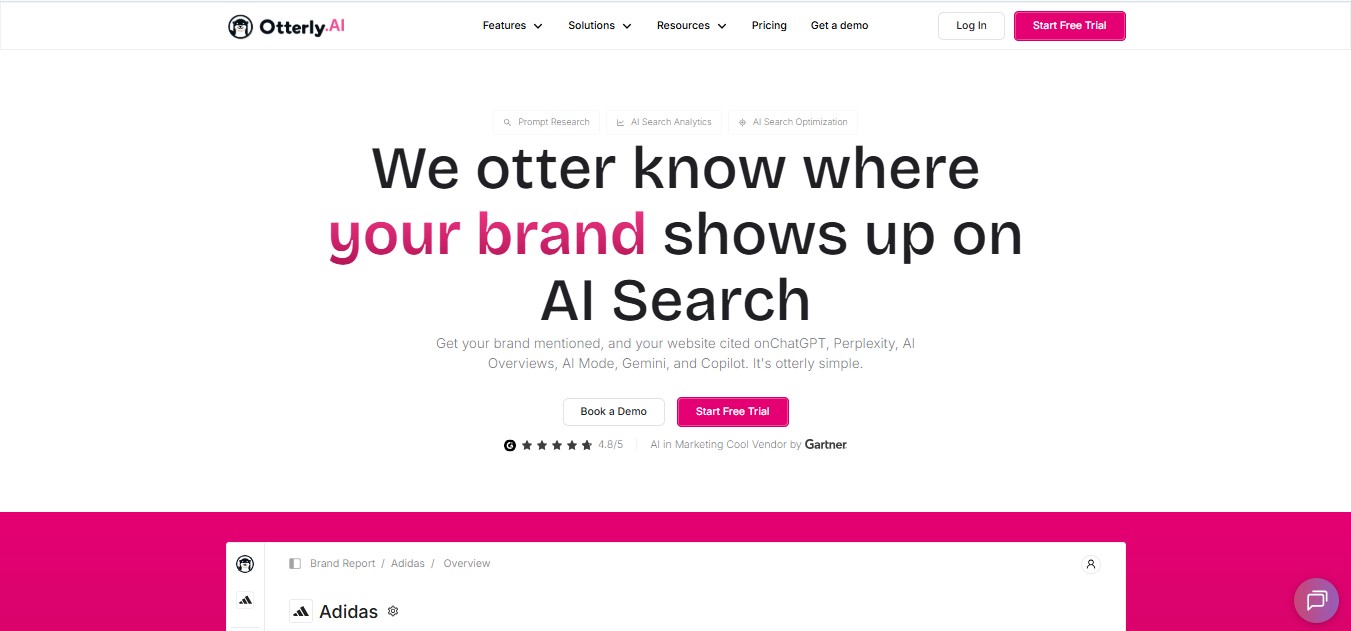
OtterlyAI combines AI search monitoring with content auditing, prompt research, citation analysis, and recommendations for generative engine optimization. It is one of the closest options to Radarkit for teams specifically interested in query fanout tracking tools for SEO.
OtterlyAI includes a Query Fan Out feature that helps users investigate the questions and research steps that occur before publishing content. It also supports agent analytics, which can show AI crawler and agent activity on your website through connected server logs.
Key Features
- Query Fan Out for researching branching questions and content opportunities.
- Prompt research for finding AI-search topics.
- Citation tracking and source analysis.
- Brand mentions, share of voice, and competitor visibility.
- GEO audits for evaluating individual pages.
- Content briefs and optimization recommendations.
- AI crawler and agent analytics for supported plans.
- Tracking across ChatGPT, Google AI Overviews, Perplexity, and Microsoft Copilot by default.
- Optional coverage for Google AI Mode, Gemini, and Claude.
Pricing
| Plan | Monthly price | Tracked prompts | Main inclusions |
| Lite | $29 | 15 | Four base AI engines, 1,000 GEO audits |
| Standard | $189 | 100 | API, MCP access, Agent Analytics, 5,000 GEO audits |
| Premium | $489 | 400 | API, MCP access, Agent Analytics, 10,000 GEO audits |
| Enterprise | From $1,000 | Custom | Custom limits and support |
The Lite plan includes ChatGPT, Google AI Overviews, Perplexity, and Microsoft Copilot. Google AI Mode and Gemini can be added for an additional monthly charge, while Claude is also an optional paid add-on. Annual billing offers a 15% discount.
Pros
- Offers a dedicated Query Fan Out feature.
- Combines fanout research with AI visibility, citations, content audits, and optimization guidance.
- Agent Analytics can show which AI agents crawl your pages and what they access.
- Starts at $29/month for smaller teams.
- Useful for SEO teams that want AI-search monitoring plus page-level content improvement ideas.
Cons
- Several AI engines cost extra beyond the four base engines.
- Standard and Premium plans are considerably more expensive than the Lite plan.
- Agent Analytics is not included with Lite.
- Teams comparing full multi-engine costs should calculate add-ons before choosing a plan.
Athena – Best for Custom AI Search Experiments

AthenaHQ is an AI search platform focused on diagnosing visibility gaps, tracking citations, estimating prompt volume, and prioritizing actions. It suits companies that want structured experiments across multiple AI models, markets, and competitors.
It is more focused on AI search intelligence and enterprise workflows than direct fanout discovery. Still, its prompt-volume estimates and citation insights can help teams identify important related questions and content gaps.
Key Features
- AI visibility tracking across ChatGPT, Perplexity, Claude, Gemini, Copilot, Grok, Google AI Overviews, Google AI Mode, and DeepSeek.
- Citation Engine for analyzing cited sources and opportunities.
- Olympus dashboard for prompt, response, competitor, sentiment, and share-of-voice analysis.
- Prompt-volume estimates through QVEM.
- Prioritized on-page and off-page actions.
- Multi-brand and multi-market reporting.
- API access, SSO, role-based permissions, and custom reporting on enterprise plans.
- Coverage across 185 markets, with city-level tracking available on certain higher plans.
Pricing
AthenaHQ has a free Essential plan that includes $25 in free credit and 300 credits. Its Starter plan costs $295/month and includes 3,600 monthly credits, multi-model tracking, unlimited team members, exports, integrations, and content actions.
Enterprise plans use custom pricing and can include expanded credit allowances, API access, SSO, multi-region support, and governance controls.
Pros
- Free plan gives teams a way to test AI visibility tracking before committing.
- Strong multi-model coverage at the paid entry tier.
- Useful for large teams that need citation intelligence and prioritized recommendations.
- Unlimited team members on Starter can benefit collaborative SEO and content departments.
- Supports market, competitor, sentiment, and share-of-voice analysis.
Cons
- Starter pricing is designed for established teams rather than small businesses.
- Credit-based usage can require closer monitoring than fixed prompt-based plans.
- Query fanout tracking is not positioned as a direct feature.
- Advanced local, multi-market, and governance capabilities may require higher-tier access.
Promptwatch (Chrome Extension) – Best Free Fanout Inspector for ChatGPT
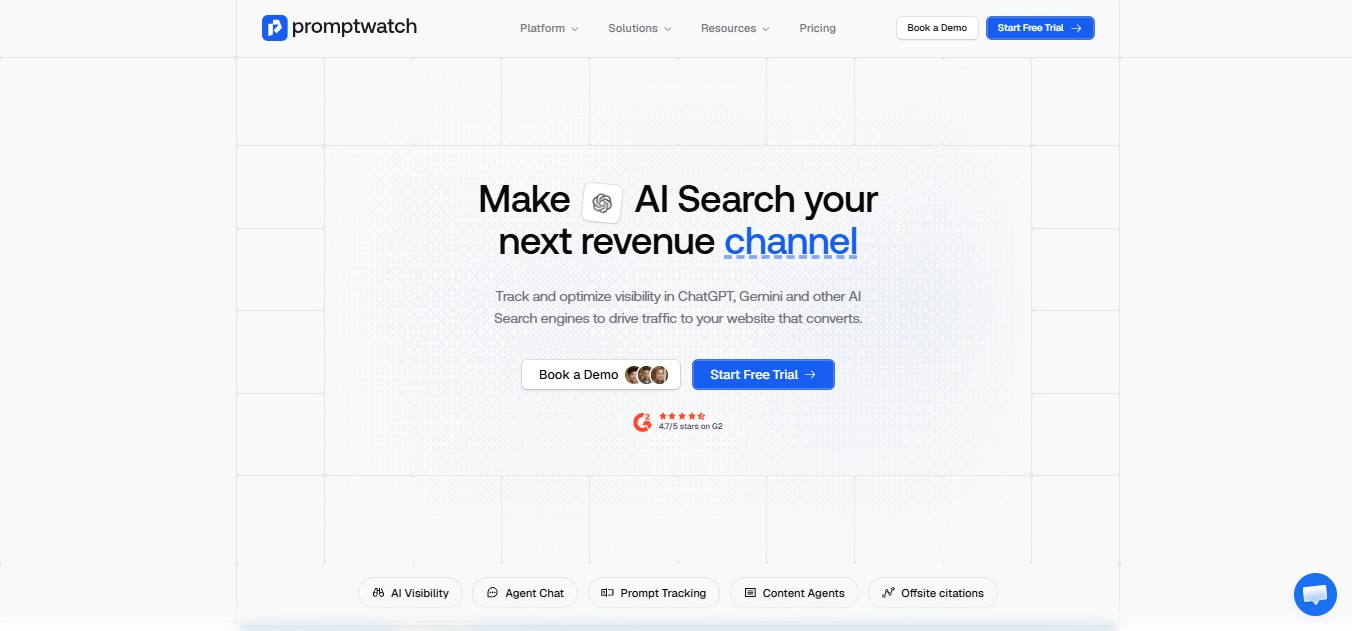
Promptwatch is an AI search visibility platform that includes prompt tracking, citations, competitor analysis, crawler data, and content operations. Its product range is broader than a Chrome extension, although browser-level inspection can be useful for people who want to see how AI search behavior connects with prompts and cited pages.
For query fanout tracking tools for SEO, Promptwatch is useful when your team needs ongoing prompt monitoring across multiple models, rather than only reviewing one ChatGPT conversation manually.
Key Features
- Prompt tracking across an AI model catalog that includes 11 models.
- Brand mentions, citation tracking, share of voice, and sentiment reporting.
- Content gap analysis.
- AI crawler and server-log analysis on higher plans.
- Agent Analytics for understanding AI bot activity.
- API and MCP access.
- Content Agents that can support publishing workflows with compatible CMS tools.
- Local and city-level tracking on Business plans.
- Shopping insights and Ads Radar on higher tiers.
Pricing
| Plan | Monthly price | Projects | Prompts | AI responses |
| Essential | $95 | 1 | 50 | 6,000 |
| Professional | $245 | 2 | 150 | 18,000 |
| Business | $579 | 5 | 350 | 42,000 |
Essential includes a seven-day free trial, four selected AI models per project, and access to the wider model catalog. Professional adds server-side crawler logs, content gap analysis, and content agents. Business includes larger response limits, broader local tracking, Shopping Insights, and Ads Radar.
Pros
- Tracks a wide range of AI models without reserving all model access for enterprise plans.
- Good option for teams that want visibility monitoring plus crawler-level analysis.
- API and MCP access are included from the entry paid plan.
- Flat monthly plans can be easier to forecast than some credit-based models.
- Content-gap analysis supports more informed content planning.
Cons
- Starts at $95/month, which may be high for users testing a small set of prompts.
- It is not presented as a direct query fanout tracking tool.
- Crawler logs and advanced content functions begin on Professional.
- Some users may prefer a lighter platform if they only need fanout tracking search queries.
SE Ranking – Best Hybrid Rank Tracker with AI Search and Fanouts
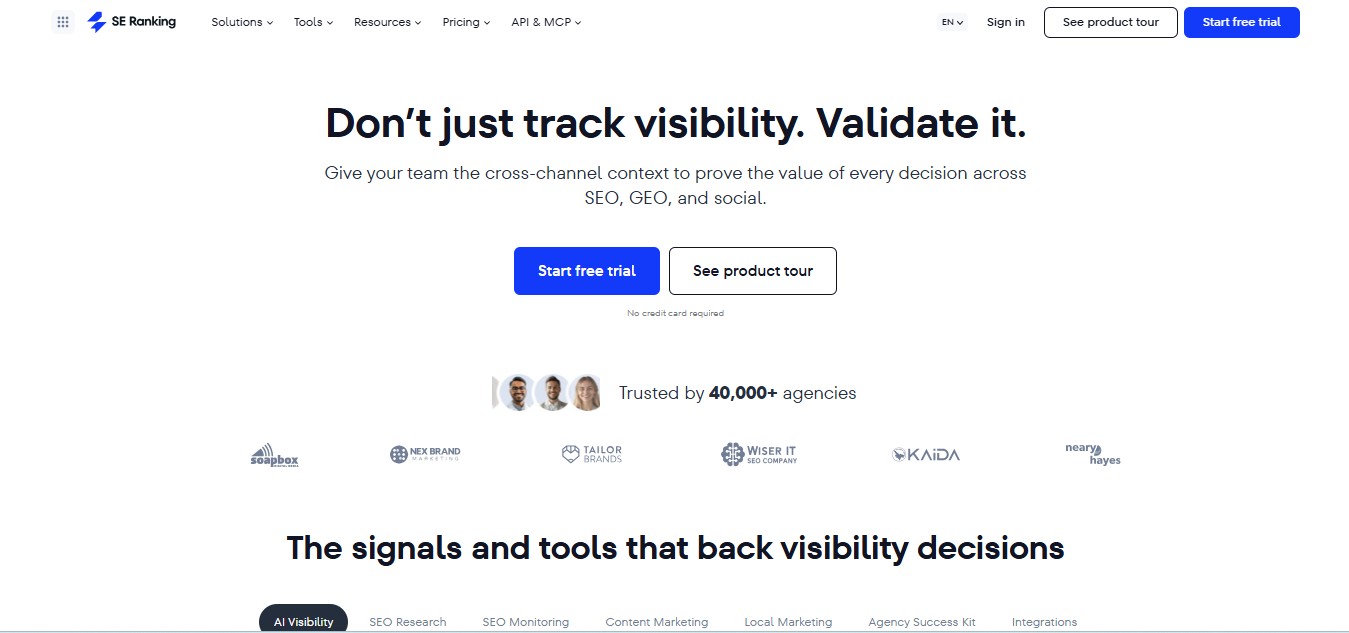
SE Ranking combines established SEO functions with AI search visibility capabilities. It is a good option for teams that need rank tracking, site audits, backlinks, keyword research, reporting, and AI search monitoring in one broader platform.
Its AI Search tools track brand mentions, citations, and share of voice across ChatGPT, Gemini, Perplexity, Google AI Mode, and Google AI Overviews. SE Ranking also provides an AI visibility API for organizations that want to incorporate AI-search data into their own reporting systems.
Key Features
- Traditional desktop and mobile keyword rank tracking.
- Keyword research, competitor research, backlink monitoring, and site audits.
- AI visibility monitoring across major answer engines.
- Brand mentions, citations, prompt tracking, and share of voice.
- Competitive Research with AI prompt data.
- ChatGPT Ads Tracker within Competitive Research.
- White-label reporting, automated reports, API access, and integrations.
- MCP access included on qualifying subscriptions.
Pricing
SE Ranking’s Core plan costs $129/month on monthly billing or $103.20/month when paid annually. Growth costs $279/month monthly or $223.20/month annually. Enterprise pricing is custom.
Its AI Search add-on starts at $89/month, or $71.20/month when billed annually. Check the final plan configuration before buying because AI search capacity, keyword limits, projects, and add-ons can vary by subscription.
Pros
- Strong choice for users who need classic SEO software and AI visibility together.
- Covers rankings, audits, backlinks, content research, reporting, and AI search.
- AI visibility API supports custom reporting and larger workflows.
- Useful for agencies already using SE Ranking for client rank tracking.
- ChatGPT Ads Tracker adds a useful view of sponsored placements in AI answers.
Cons
- AI search functions may involve an add-on cost beyond the core subscription.
- Direct query fanout analysis is not the main focus of the platform.
- The full cost can be higher than a dedicated fanout tool for users who only need AI prompt research.
- Its broad set of SEO features may be more than a small content team needs.
Nightwatch (via Radarkit Comparison) – Best for Agencies Wanting AI + Traditional Rank Tracking
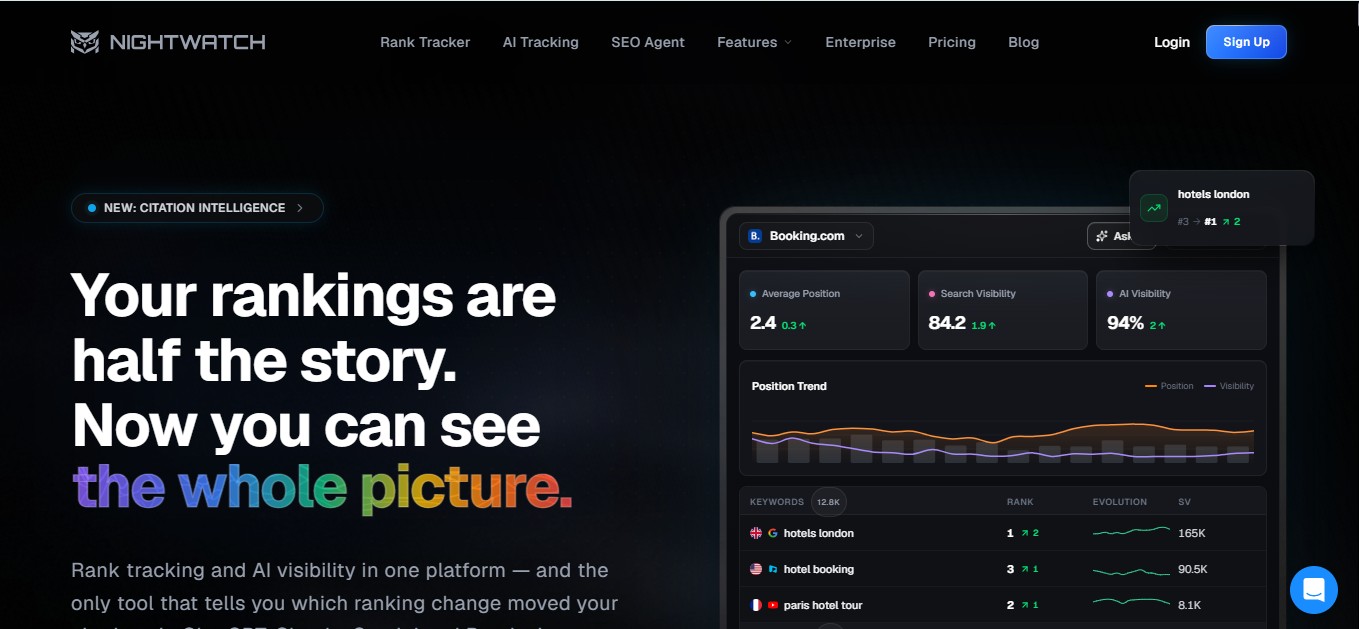
Nightwatch is a rank tracking platform that now combines traditional keyword monitoring with AI visibility and citation intelligence. It suits agencies that want daily ranking data, local SEO reporting, client dashboards, and AI answer insights in one place.
It is a strong fit for teams with established keyword tracking needs. For AI search fanout analysis, it offers related visibility and citation data, but it is not primarily positioned as a direct fanout tracker.
Key Features
- Daily desktop and mobile keyword rank tracking.
- Local keyword monitoring and SERP snapshots.
- AI visibility and Citation Intelligence.
- Prompt research and AI answer monitoring.
- Keyword research, site auditing, and content tools.
- White-label reports, client dashboards, Looker Studio support, and API access.
- Team access without per-seat pricing on paid plans.
- MCP connectivity for supported workflows.
Pricing
| Plan | Monthly equivalent with annual billing | Annual invoice | Keywords | AI prompts |
| Starter | €79/month | €948/year | 500 | 50 |
| Professional | €159/month | €1,908/year | 2,500 | 150 |
| Agency | €399/month | €4,788/year | 7,500 | 500 |
| Enterprise | Custom | Custom | Custom | Custom |
All plans include the full core toolkit and unlimited seats. Nightwatch also offers a 14-day free trial without a credit card.
Pros
- Combines AI visibility with established daily rank tracking.
- Unlimited seats can be useful for agencies and larger SEO teams.
- White-label reporting and client-focused features support agency workflows.
- Strong keyword limits for organizations monitoring traditional rankings at scale.
- Includes local SEO, AI citation intelligence, and reporting integrations.
Cons
- Entry pricing is higher than tools designed mainly for AI visibility testing.
- Direct query fanout tracking is not Nightwatch’s core focus.
- Annual billing is needed to access the advertised monthly-equivalent prices.
- Teams focused only on AI search may not need its full traditional rank tracking stack.
Final Verdict
Radarkit is the best overall choice for marketers looking for query fanout tracking tools for SEO in 2026. It provides direct Query Fanout tracking, AI visibility monitoring, citation analysis, competitor tracking, location-based AI research, AI traffic data, and practical content tools in one platform.
Its $29/month starting plan makes it easier to test compared with several enterprise-first AI visibility platforms. More importantly, Radarkit helps turn AI search fanout analysis into a content plan. You can identify related questions, review the cited sources and competing brands, then create or refresh content around genuine user needs.
Choose Radarkit if you want a balanced platform for content research, AI search monitoring, competitor analysis, and query fanout tracking. Choose OtterlyAI if AI crawler analytics and GEO audits are your main priority. Choose Ahrefs, SE Ranking, or Nightwatch if traditional SEO rank tracking and backlink research are equally important. Consider Profound, AthenaHQ, or Promptwatch when your company needs broader enterprise reporting, large-scale prompt monitoring, or advanced data workflows.
FAQ
What is query fanout and why does it matter for SEO?
Query fanout is the process where an AI search system expands one user prompt into related searches, follow-up questions, entities, comparison points, and supporting research tasks. Instead of answering only the original wording, the system may explore several connected topics before producing a response.
For SEO, this matters because a page that answers only one narrow phrase may miss the wider intent behind the question. Fanout insights can help you cover pricing, comparisons, use cases, setup questions, alternatives, feature requirements, and common objections within a helpful content structure.
Which tools reveal, approximate, or monitor fanout subqueries?
Radarkit and OtterlyAI directly position Query Fanouts or Query Fan Out as product capabilities. Radarkit is useful for uncovering related AI-generated questions and converting them into content opportunities, while OtterlyAI combines Query Fan Out with prompt research, citations, and GEO audits.
Ahrefs, Profound, Peec AI, AthenaHQ, Promptwatch, SE Ranking, and Nightwatch provide related capabilities such as custom prompt tracking, prompt research, citation analysis, competitor gaps, AI visibility measurement, and content-gap data. These can help approximate the wider query journey even when the platform does not label the feature as fanout tracking.
How can fanout data guide content clusters without creating thin pages?
Start by grouping fanout questions by search intent rather than treating every question as a separate article. Create one detailed pillar page for the main subject, then publish supporting pages only when a fanout branch has a distinct audience need, commercial intent, or enough depth to deserve a full answer.
For example, a pillar page about “best project management software” could include a comparison table, pricing overview, core features, and setup guidance. Separate supporting pages could cover “best project management software for freelancers,” “Trello alternatives,” or “project management software pricing,” because each has its own intent and useful depth.
Avoid creating separate pages for small wording variations such as “best project software” and “top project management tool.” Combine closely related phrases into one useful section, comparison table, or FAQ.
Is a query fan-out tracking tool different from a keyword rank tracker?
Yes. A traditional rank tracker measures where pages appear in conventional search results for chosen keywords. A query fan-out tracking tool focuses on the related prompts, questions, sources, citations, brands, and topic paths involved in AI-generated answers.
The strongest SEO workflows often use both. Use rank tracking for Google keyword positions and organic traffic opportunities. Use AI search fanout analysis to understand how ChatGPT, Perplexity, Gemini, Google AI Mode, and AI Overviews interpret a broader question.
How often should I check AI search fanout data?
Weekly checks are useful for active content campaigns, competitive industries, product launches, and agency reporting. Monthly checks may be enough for stable websites with a smaller group of core prompts.
Daily refreshes are most useful when you monitor time-sensitive subjects, high-value commercial prompts, or brands that compete heavily for AI citations. Radarkit Growth and Pro plans include daily refreshes, while its Lite plan refreshes every 72 hours.
Can query fanout tracking improve content for AI Overviews and ChatGPT?
It can improve the planning process. Fanout data helps you see the supporting questions and evidence a complete answer may need. You can use that information to strengthen headings, add concise direct answers, include useful comparison details, improve FAQs, add original evidence where available, and keep related information together.
The goal is not to create content only for machines. The goal is to make pages more complete, accurate, easy to scan, and genuinely useful for people who need an answer.
